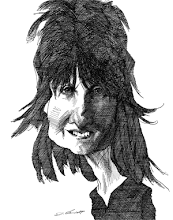
In the opening pages of his autobiography, Nabokov announces the following:
"What I have not been able to rework through want of specific documentation, I have now preferred to delete for the sake of overall truth." (Pg. 14, second paragraph)
I found this remarkable for two reasons.
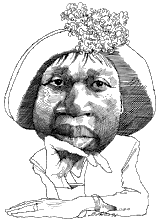
1 - This contrasts distinctly with they way that Mary McCarthy openly admitted to including error/fictionalization which she provides commentary on in her italicized responses to chapters.
2 - This implies that we are supposed to believe every word of Nabokov's narrative. Can we possibly do that? What about places that veer into imagination quite obviously? I suppose that we can believe these passages are true at least in that they may really have happened in his mind, but we cannot necessarily believe that they happened in actual reality. This, of course, begs the question of what "actual reality" is and where the line between reality and imagination occurs. Perhaps much of what we remember is imagination, as our imagination colors our every interaction. Or perhaps not. I can't answer that question for all of us.
What I can say is that Nabokov asserts that his entire autobiography is truth. This does not mean, to my mind, that there is no fiction or imagination at work... it simply means he is not creating any of his story out of nothing; everything he writes is based in fact or memory that he believes is fact.

Subscribe to:
Post Comments (Atom)







No comments:
Post a Comment